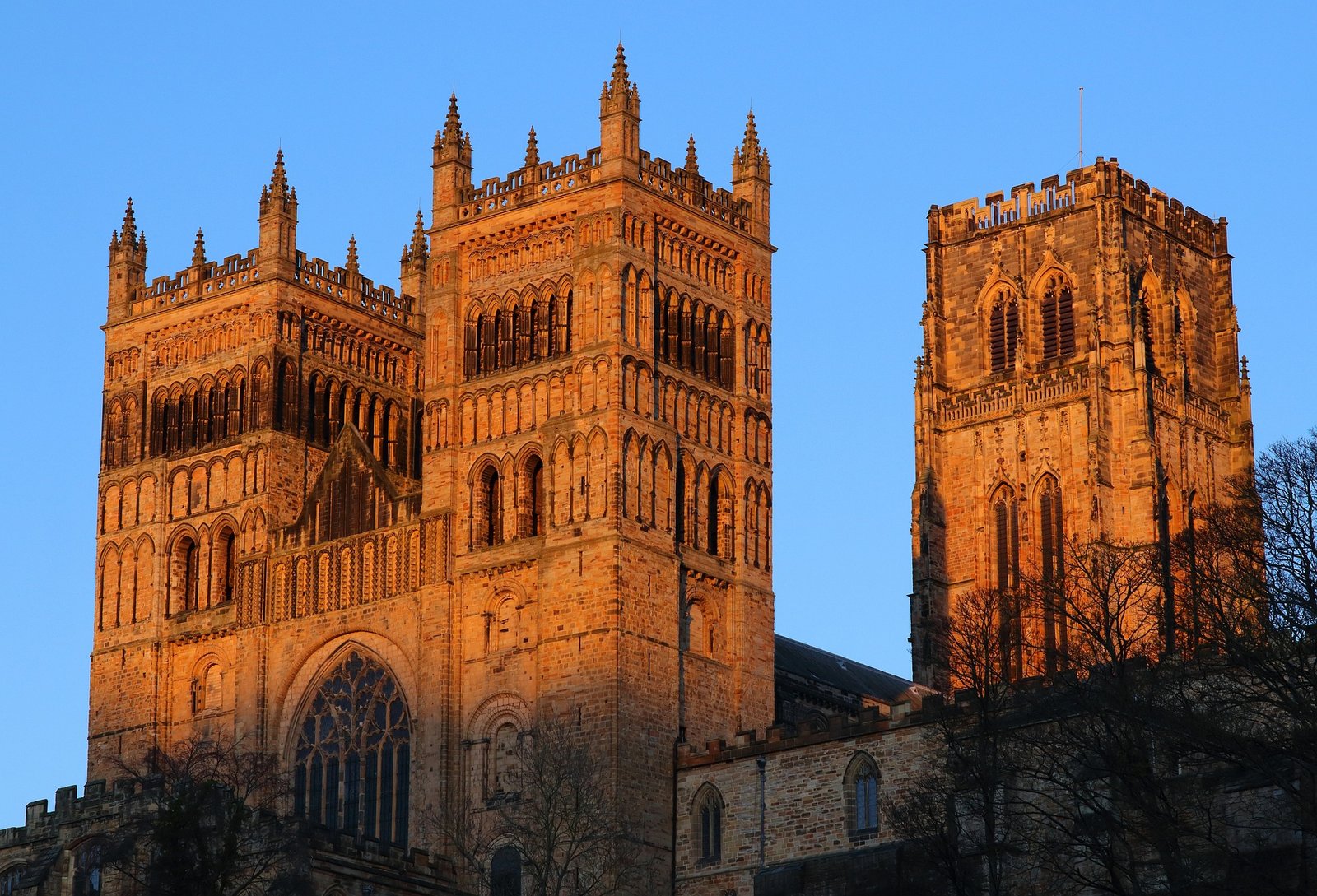
Durham is easy to romanticise. You stand on the peninsula, watch the River Wear coil below the walls, and it is tempting to imagine the city as a tableau of monks and masons, all solemn purpose and candlelight.
The real Durham was smaller, busier, and more human than the myth.
In the medieval period, Durham was not a vast metropolis. It was a compact cathedral city with a population that, by modern standards, would feel like a large village or a small town. “How many people?” is a deceptively hard question, because medieval record-keeping rarely resembles a modern census. We have taxes, rentals, court rolls, household counts, and ecclesiastical records, each capturing a different slice of the population.
But the more useful question, for a writer, is often this: who was actually there?
The cathedral wasn’t the whole city, but it shaped everything
Durham’s cathedral and priory were major employers and landlords. They created demand for skilled labour, food supplies, transport, and services. Even if you were not part of the religious community, you felt its gravity. Money and authority concentrated around the Close, and the city organised itself in response.
Who lived in and around Durham?
A medieval Durham street could hold:
- Religious residents: monks (later Benedictines), officials, clerks, servants attached to the priory.
- Skilled trades: masons, carpenters, glaziers, metalworkers, parchment-makers, scribes.
- Everyday labour: carters, washerwomen, porters, river workers, market sellers.
- Commerce: alewives, bakers, butchers, fishmongers, chandlers.
- The transient: pilgrims, travellers, messengers, the poor seeking help, those coming to petition the cathedral authorities.
And because Durham was a border region with a complicated history, you also have the sense of watchfulness: people attuned to rumours, shifting power, and the idea that safety is never guaranteed.
Why population matters to gothic fantasy
Population size changes the feel of your story:
- In a small city, everyone knows everyone, or at least knows of them. Secrets spread.
- Institutions become personal. Authority has a face.
- Violence feels intimate, not abstract.
- A single building, like the cathedral, can dominate the skyline and the psyche.
Durham, then, is not just a backdrop. It is a pressure vessel. And if you place something impossible beneath its stones, the whole city feels it.
Next time: I’ll dig into the cathedral economy, and why “sacred” and “political” are rarely separate.

0 Comments